


DP World Completes First Phase of Living Seawalls at Jebel Ali Port, Setting Sustainability Benchmark
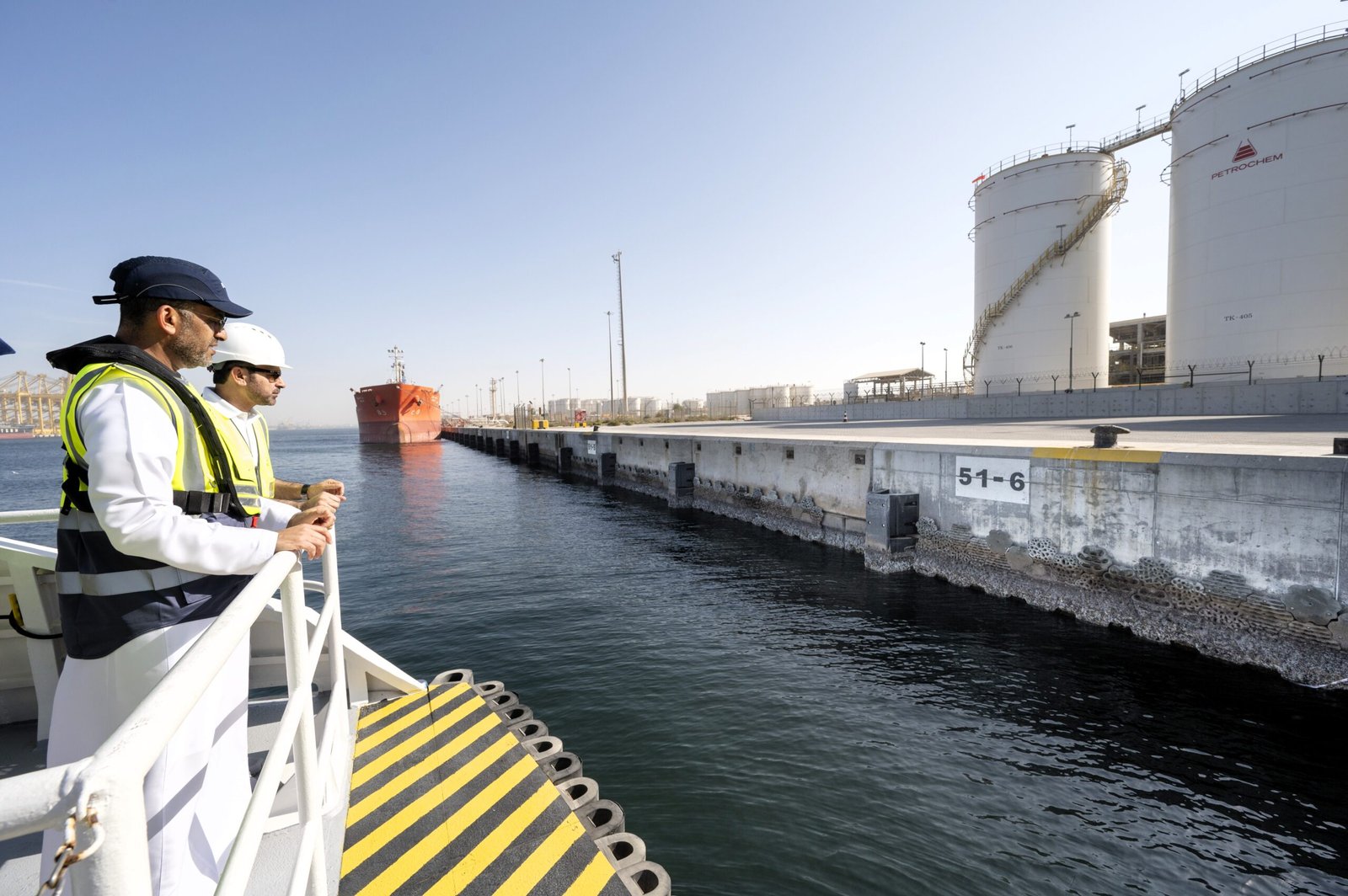
DP World has reached a significant milestone in sustainable port infrastructure with the completion of the first phase of its Living Seawalls installation at Jebel Ali Port. This initiative saw the deployment of 1,000 eco-engineered panels designed to transform traditional flat seawall surfaces into vibrant habitats, enabling marine life to thrive and enhancing biodiversity within the region. The project sets a new standard for sustainable development in port environments across the Gulf.
Carried out in partnership with Living Seawalls, a science-led programme from the Sydney Institute of Marine Science, the project is set to expand to 6,000 modular panels by 2028. Upon completion, this initiative will create the region’s longest continuous waterfront structure dedicated exclusively to supporting functioning marine ecosystems.
Each of the modular panels incorporates varied shapes and textures, which mimic natural rock formations. This innovative design provides ideal conditions for marine species to settle and grow, turning previously inhospitable surfaces into rich ecological niches.
“Ports play a critical role in coastal resilience and this programme shows how infrastructure can support trade while restoring natural habitats. By integrating science-based designs across our ports, we are helping marine life to establish and thrive in areas traditionally limited in habitat value.” — Abdulla Bin Damithan
The project includes a comprehensive biodiversity monitoring programme at Jebel Ali, set to begin in 2026. This research aims to advance global understanding of how port operations can contribute to ecological resilience on a wider scale.
Importantly, the Jebel Ali initiative forms part of DP World’s Ocean Strategy and aligns with global biodiversity targets under the Kunming Montreal Global Biodiversity Framework. The design and implementation of Living Seawalls in Dubai build on an earlier pilot at the Port of Callao in Peru. There, monitoring recorded 66 species across 12 marine groups within 12 months, with seven species observed exclusively on the Living Seawalls surfaces. No invasive species were noted, and improvements were seen in both algal diversity and ecological functionality, reinforcing the ecological benefits of these nature-inspired panels.
Beyond the Living Seawalls, DP World continues to invest in nature-positive projects across its global portfolio, supporting initiatives such as the Dubai Reef, circular economy models in port waste management, and a range of additional ocean-focused programmes. As environmental pressures mount on coastal cities, projects like the Jebel Ali Living Seawalls offer a scalable model for integrating scientific innovation, sustainable practices, and port development.
Team V.4-EM-UAE